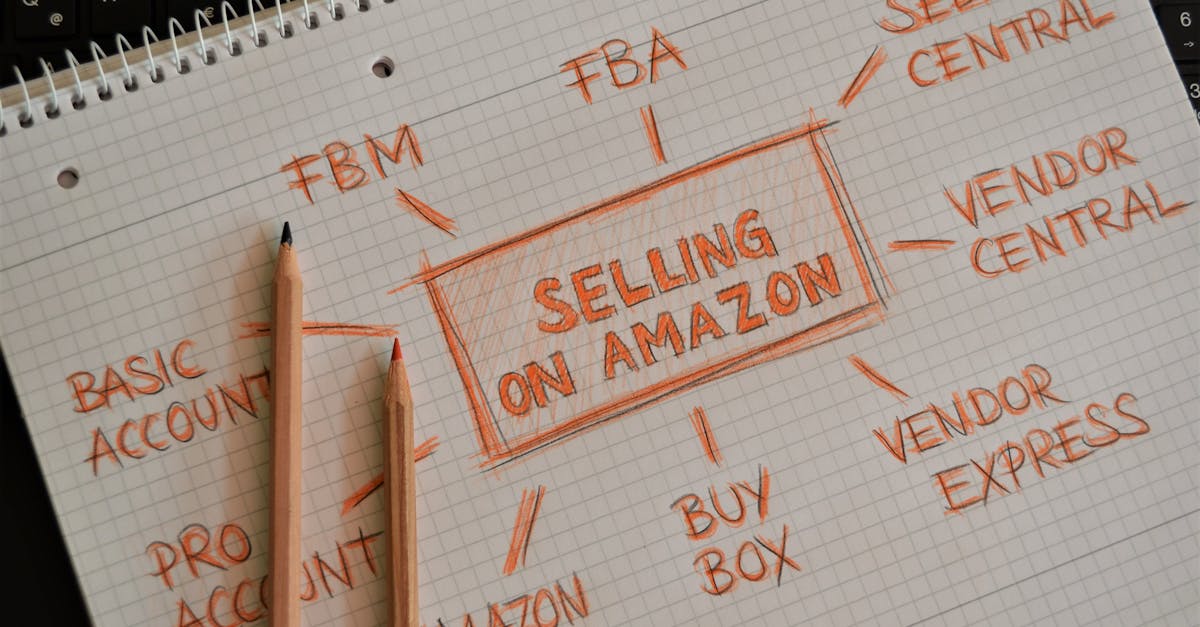
Amazon FBA vs. Print on Demand: Costs, Risks, and Workload
Compare stocked FBA selling with a connected-store POD business by cash commitment, order economics, customer acquisition, workload, and downside.
Amazon FBA and print on demand solve different operational problems. FBA stores and fulfills inventory you arrange in advance. Print on demand makes a product after an order, typically through a production partner. The better fit depends on what you can sell responsibly, how much cash you can commit, and which operating work you can manage.
Neither arrangement supplies a complete business. You still need a buyer, a credible product, a workable price, and a way to handle exceptions. A comparison based only on warehouse fees or a shirt printing quote leaves out much of the decision.
Define what you are actually comparing
FBA is a fulfillment service, while POD describes when and how a product is produced. They are not mutually exclusive business categories. For a useful beginner comparison, this guide contrasts a stocked product sold through Amazon using FBA with an original-design POD product sold through your own connected storefront.
A POD product can be sold through other channels, including marketplaces, subject to their rules. A stocked brand can sell outside Amazon. Changing the sales channel changes acquisition work, fees, customer relationships, and policies, so write down the exact setup before comparing costs.
If you are comparing two ways to ship the same stocked item, use FBA versus FBM instead. That decision is about fulfillment method, not stocked production versus making an item to order.
Compare the cash commitment before the first customer
With stocked FBA selling, you may pay for samples, a production or wholesale order, preparation, inbound transport, and other setup before any units sell. Unsold inventory remains a cash commitment and may create storage or removal costs. Buying a lower unit cost in bulk can still be a poor decision if too few units sell.
With connected-store POD, you may avoid buying a batch of finished inventory. You still pay for samples, permitted artwork, storefront costs, and fulfilling accepted orders. Supplier charges can fall due before customer payments are released to you, so low inventory does not eliminate working-capital needs.
Printful's connected-store payment explanation illustrates the separate buyer-to-store and seller-to-provider payments. Confirm your actual channel arrangement rather than assuming every POD service uses this flow.
A cash comparison with invented inputs
Suppose a stocked test buys 100 units at $8 each and needs another $200 for preparation and inbound movement. That is a $1,000 commitment before the other costs. If 20 units sell, 80 remain; allocating those stated costs evenly gives $800 still represented by the remaining stock, not $800 of available cash.
Suppose instead that a POD test spends $60 on samples and receives eight orders before the store payout arrives. At an assumed $19 production-and-shipping bill per order, fulfilling those orders needs $152. Samples plus these bills require $212 before any other expenses or refund buffer.
These are hypothetical operating examples, not equivalent offers or provider quotes. The POD scenario has less finished-stock exposure, but it does not prove stronger demand or profitability. The FBA scenario might have different pricing, delivery expectations, repeat purchases, and customer access. Assess those differences separately.
Compare complete order costs without declaring a universal winner
Amazon's selling-cost guidance separates selling charges from fulfillment and storage. Use current estimates for the exact category, dimensions, weight, destination, and account conditions; there is no single all-in FBA rate.
- Stocked FBA: product purchase, preparation, inbound movement and placement where applicable, selling charges, fulfillment, storage, returns, and unsold-inventory handling.
- Connected-store POD: product and printing, shipping, storefront and payment charges, sample/design spending, replacements, returns you must fund, and support.
- Both: customer acquisition, software, insurance or professional help where needed, owner time, tax obligations, and costs omitted from simplified calculators.
One hypothetical stocked order sells for $30. Assume $10 allocated product/inbound cost, $4.50 selling charges, $5 fulfillment, and $1.50 storage/return allowance. The $21 total leaves $9 before acquisition, fixed costs, owner work, and tax. Spending $4 to acquire that order leaves $5.
One hypothetical POD order also sells for $30 including shipping. Assume $14 production, $5 shipping, $2 selling/payment charges, and $1 support/remake allowance. The $22 total leaves $8 before acquisition, fixed costs, owner work, and tax. Spending $4 to acquire that order leaves $4.
That one-dollar difference belongs to those invented assumptions, not to the models generally. A different product, channel, return rate, or acquisition cost can reverse it. Run a slow-sales case as well as an ordinary-order case, and do not treat an allowance as an observed loss rate.
Use the FBA fee worksheet for the stocked route and a separate product-specific quote for POD. Keep the same revenue definition and cost boundaries so one side does not quietly include fewer obligations.
Customer acquisition is different work, not free work
An Amazon listing can reach people already shopping on Amazon, but appearing in the store does not guarantee discovery or purchases. You still compete on product relevance, price, availability, listing quality, trust, and the rules of that marketplace. Advertising may add another cost; it is not proof that the underlying product works.
An independent POD store gives you a different presentation and customer experience, but you need a route to suitable visitors. A design generator and a checkout page do not supply that route. Permission-based communities, useful demonstrations, partnerships, and search content each take effort and may produce no orders.
Compare how you can reach a specific buyer today. A graphic designer with permission to serve a real community has a different starting position from someone uploading unrelated designs with no audience. A seller with legitimate sourcing evidence still needs a credible reason a buyer would choose their stocked product.
Compare the workload before, during, and after a sale
Stocked FBA work
Expect sourcing, supplier communication, inspection, product compliance, inventory planning, inbound preparation, listing maintenance, and receiving reconciliation. After launch, watch stock, charges, returns, and account issues. FBA handles important fulfillment tasks but does not take over your product business.
Connected-store POD work
Expect design and rights checks, sample inspection, variant mapping, product-page preparation, store maintenance, and acquisition. During selling, watch order holds, billing, production, tracking, and customer questions. An exception involving one order can still require several conversations even when you never touch the parcel.
The POD first-test guide can help you rehearse that setup without opening a large catalog. Limit product variety until you know which work repeats and which problems need individual attention.
Compare downside and control
- Inventory risk: stocked goods can remain unsold or become costly to store; POD can leave you with design and setup costs plus liabilities from accepted orders.
- Quality control: stocked inventory can be inspected before dispatch, depending on your supply process; POD requires representative samples and ongoing issue monitoring. Neither guarantees every unit.
- Delivery control: outsourced storage or production reduces some physical work but adds provider dependence. Do not promise timing you cannot support.
- Customer remedies: platform rules, supplier coverage, your published promises, and applicable law can differ. Someone must own the customer response.
- Concentration: one marketplace, one supplier, one product, or one traffic channel can become a dependency worth limiting.
The smallest financial commitment is not always the safest operational choice. If you cannot check design rights or product quality, POD is not ready. If you cannot tolerate slow stock, understand preparation rules, or fund the inbound process, FBA is not ready. Resolve the disqualifying issue before calculating potential upside.
Make a choice with a bounded evidence plan
Use the business-model fit framework to list your available hours, cash limit, skills, customer access, and work you cannot take on. Then test the main uncertainty for each plausible route.
- Specify one buyer, one product concept, and one sales channel for each option.
- Get current product-specific quotes and verify the applicable rights and eligibility.
- Map cash due before sales, cash due per order, and a refund or slow-stock case.
- Write a realistic weekly task list, including acquisition and exceptions.
- Choose a small investigation or operational sample that could change the decision.
- Set a review date and a spending limit before making a larger commitment.
You do not need to run two businesses to compare them. Supplier evidence, a physical sample, a current cost sheet, and a credible acquisition plan may reveal that one route is unsuitable. Choosing neither until a specific gap is resolved can be the most useful result.
Discover how AscendorHQ helps you choose, learn, and build an online business.
Explore AscendorHQ